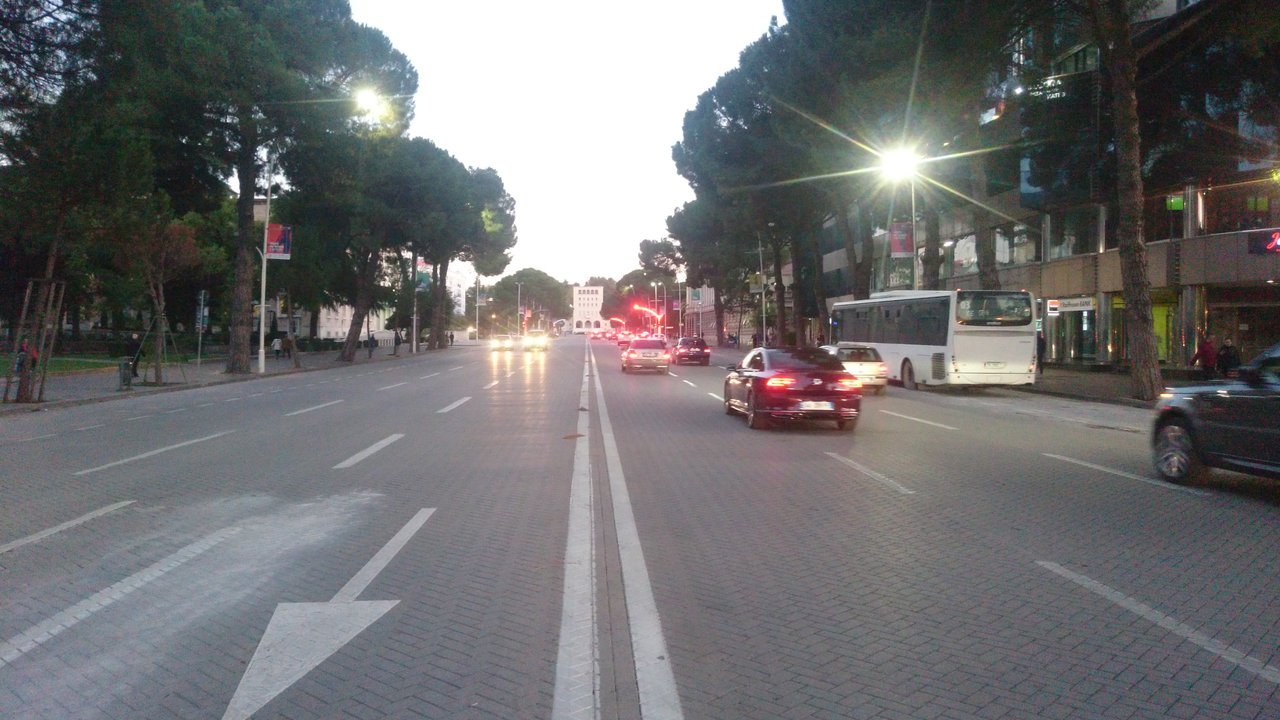
Student-led protests in Albania’s capital appear to have turned violent, in what the Guardian calls the most violent outburst yet against Prime Minister Edi Rama, according to the state news agency and international outlets. ATA, the Albanian Telegraphic Agency, says a protest “joined by other citizens” began at 11 a.m. on Wednesday, October 14, and “escalated into widespread violence,” with demonstrators “attacking state institutions, vandalising businesses and setting buildings on fire.” The earliest timestamped report this desk read on Wednesday’s events came from Euronews Albania (11:07 UTC, or 4:07 AM PT), which reported Rama’s first comment after a cabinet meeting; Gazeta Tema followed at 1:53 PM local time (4:53 AM PT), then Al Jazeera (9:23 AM PT), the Guardian (10:21 AM PT, updated 2:25 PM PT) and the BBC (Rachel Flynn, 1:29 PM PT). The Associated Press story on the riots returned 403 to this desk and timed out on a second fetch, so this desk did not use it.
ATA gives the most detailed route. It says that after attacking the Ministry of Education and businesses along Durrës Street, demonstrators moved to Martyrs of the Nation Boulevard, smashed security cameras, traffic lights and advertising signs, and then attacked the Interior Ministry, the Ministry of Economy and Innovation and the Bank of Albania. According to ATA, demonstrators “attempted to attack the prime minister’s office with fireworks and Molotov cocktails but were stopped by police.” The agency says protesters smashed windows at the Pyramid, a capital landmark, set fire to a private business in one of the towers opposite it, broke down the door of the parliamentary presidium building and set off flares that caused a fire inside, and attacked the Justice Ministry with stones and Molotov cocktails. ATA, the Guardian, the BBC and Al Jazeera all say police used tear gas and water cannon.
Accounts of the fires differ in detail and timing. The Guardian reports that protesters set alight “a government building and two banks,” started a fire at the ministry of education building, and that a branch of Raiffeisen Bank near the ministry “also caught fire.” Al Jazeera, citing police, says demonstrators “broke in overnight on Tuesday and lit a fire inside of the building,” and that the violence led to 16 arrests. The BBC says Wednesday “saw part of the education ministry's building set on fire,” and says the prime minister’s office, the finance and interior ministries and surrounding businesses also came under attack. This desk could not establish whether the outlets describe one fire at the ministry or two.
Wednesday’s police figures come from the State Police via ATA, and the counts for Tuesday do not match across outlets. ATA reports that the Albanian State Police said on Wednesday evening that 14 officers got injured and 35 people went into custody “so far.” ATA quotes the police statement: “The endangerment of the lives of police officers and citizens must stop immediately,” and “Those responsible for these acts will be identified and held accountable under the law.” The Guardian quotes a police line: “Any person who uses violence, burns or destroys property, or attacks police officers, bears individual responsibility and will face the law, in accordance with the offences committed.” For Tuesday, the BBC, citing the state-run news agency, says 16 people got arrested “in connection with violent acts”; Gazeta Tema says 23 people went in for questioning on Tuesday and seven received hospital treatment. This desk did not read the State Police’s own release.
Crowd estimates vary widely. The Guardian says tens of thousands of students took to the streets; the BBC says thousands of students; Al Jazeera says hundreds of students gathered and threw rocks at the ministry on Wednesday. The outlets also count the days differently: the BBC says the demonstration began outside the ministry of education on Tuesday and calls Wednesday the second day, and Euronews Albania (in this desk’s translation) also describes Wednesday as the second day of the student protest and says high school students joined; Al Jazeera’s headline says the protests entered a third day and its text says fierce protests broke out on Monday. The Guardian, citing Albanian media, says the protests spread to universities in Elbasan and Shkodër.
The government condemned the violence, the Guardian reports, while Rama said students deserve a hearing. Gazeta Tema reports that Rama told ministers at Wednesday’s cabinet meeting that those responsible for the violence do not count as students, and that genuine student protesters should get a hearing and have their concerns taken seriously; Euronews Albania, citing its reporter Eksiola Shehu, carries the same account and says Rama earlier entered his office through a back entrance because the main entrance had got sealed off for the protest. Deputy Prime Minister Albana Koçiu wrote on Facebook, as the Guardian and Al Jazeera quote her: “Protesting is a legitimate right, but it cannot be used as an excuse for violence, city destruction or ugly fighting in the middle of the road.” The BBC says Koçiu called for “calmness, self-restraint and maturity” and said “Albania does not need to burn to change”. The BBC also says economy minister Delina Ibrahimaj called setting fire to an institution an act that endangers lives rather than a peaceful protest.
Protesters and the opposition frame it differently. The Guardian quotes a student it identifies only as Lora, who declined to give her last name as she threw rocks at police: “This is a revolution. We are tired of peaceful protests. We will not stop until Rama resigns.” The BBC, citing Reuters, quotes demonstrator Enida Bimi saying the protest goes beyond the students and stands “for all the people of Albania”, and protester Arber Leshi saying people feel angry at “the most corrupt government our country has ever seen”. The BBC says opposition Democratic Party leader Sali Berisha praised the protesters, quoting him, via ATA: “The streets and squares of Tirana have never seen lions like these students.” The Guardian says protesters also dismiss opposition figures as unpalatable alternatives.
The demands mix campus and national politics. ATA says protesters want better conditions at universities, lower higher-education costs, greater financial support for students and better job prospects after graduation, and that they have also called, above all, for the government to step down; the Guardian attributes the campus demands to student organisers. The BBC and Al Jazeera link the unrest to the so-called Flamingo Revolution, months of protests set off by a luxury resort project linked to Jared Kushner, President Donald Trump’s son-in-law; the Guardian says the unrest caps a summer of peaceful protests against Rama triggered by a proposed Kushner-backed resort on Albania’s southern coast. Besar Likmeta, an editor at the Balkan Investigative Reporting Network, told Al Jazeera that “this protest came on the back of four months of daily rallies on the main streets of the capital”. The Guardian notes that Rama won a fourth term in May last year.
The European Union, which Albania hopes to join, voiced concern. The Guardian reports that the EU delegation in Tirana referred to a “violent escalation at the protest in Tirana” and said: “We take note of the allegations of excessive violence by the police against protesters and journalists.” The Guardian says the delegation called for a prompt investigation and encouraged “all sides to de-escalate the tension”. Seems News reading note: the state agency and police supply the damage list and the injury and custody figures; the outlets supply the crowd, quotes and context, and they disagree on the size of the crowds, the day count and the Tuesday arrest numbers. Watch for an updated State Police tally, an investigation of the police-violence allegations, and whether students and the government open talks.
