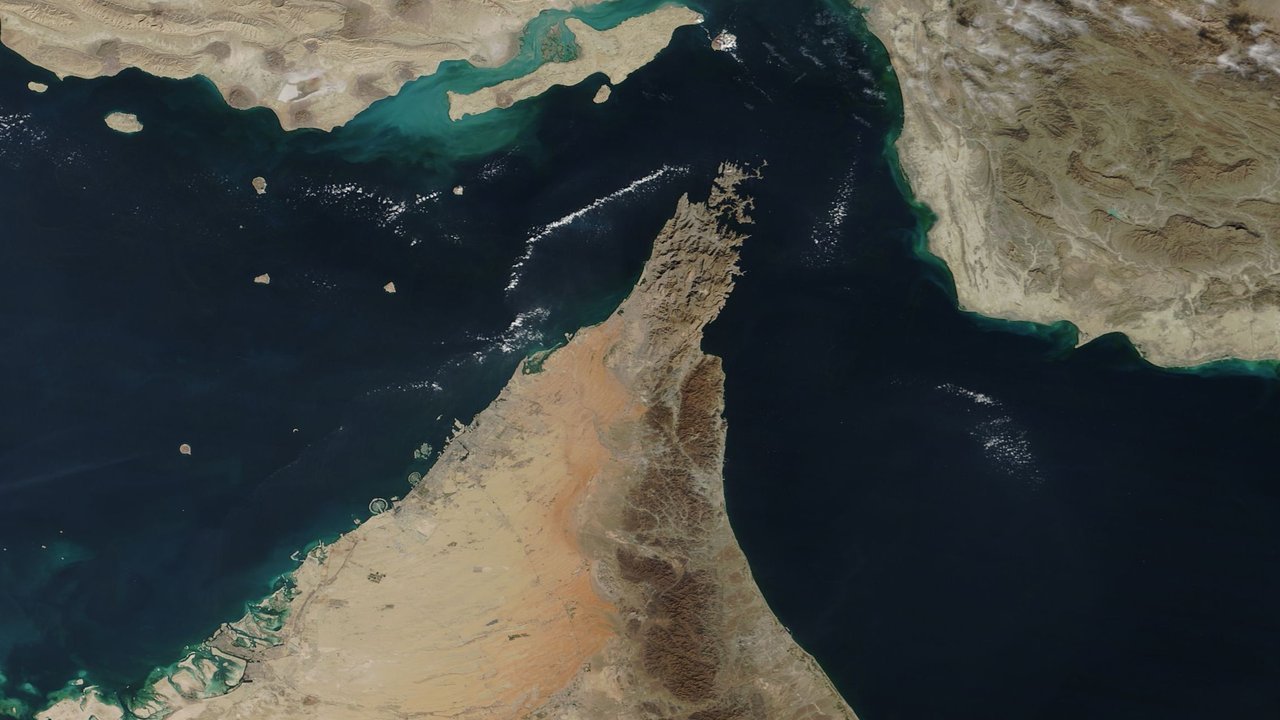
A Singapore-registered container ship appears to have sunk in the Strait of Hormuz after a strike that its flag state attributes to “unknown projectiles,” while Iran’s Revolutionary Guards say an unnamed container ship went down after hitting a naval mine. In a media release dated October 14, the Maritime and Port Authority of Singapore (MPA) says GFS PRIDE and a second Singapore-registered vessel, GFS GISELLE, “were reportedly struck by unknown projectiles while transiting the Strait of Hormuz on 13 and 14 October 2026 (Singapore Time), respectively.” The release says: “GFS PRIDE sustained damage and a fire on board, and has since sunk. All 21 crew members were safely evacuated. No injuries have been reported.” The earliest timestamped report on the Iranian mine claim that this desk read came from Iran International (09:22 UTC, or 2:22 AM PT); Tasnim’s English page carries a 13:56 time stamp. The earliest outlet report naming GFS Pride that this desk read came from Singapore’s CNA (8:57 PM Singapore time, or 5:57 AM PT), followed by the BBC (David Gritten, 8:34 AM PT), CNBC (Spencer Kimball, 8:47 AM PT) and the Washington Post (Susannah George, 8:57 AM PT).
The MPA gives a different outcome for the second ship. Its release says “GFS GISELLE sustained hull damage and has since arrived under its own propulsion at a safe anchorage,” with all 22 crew members safe and no injuries reported, and that no Singaporeans sailed aboard either vessel. The MPA says it stays in contact with the vessels’ management company. It names no attacker, but it condemns the strikes: “MPA is deeply concerned about the continued attacks on commercial shipping in the Strait of Hormuz, including the latest incidents involving two Singapore-registered vessels.” The release adds: “Such attacks are unprovoked, unjustifiable, and a breach of international law.” CNA and CNBC both quote that line, CNBC without the comma after “unjustifiable.”
Iran’s account differs on the mechanism. Tasnim reports that the Islamic Revolution Guards Corps Navy announced a container ship sank in the Strait of Hormuz “after striking a naval mine and catching fire while attempting to pass through an unauthorized and dangerous route.” According to Tasnim, the IRGC Navy statement says the ship carried more than 2,500 containers, sank “in the southern waters of the Strait of Hormuz on Wednesday morning due to the intensity of the fire,” and urged local vessels and fishermen to take care to avoid floating containers. Iran International says the statement “did not identify the ship or give details about its crew or any casualties.” The BBC says the Guards released photos that appeared to show black smoke rising from a container vessel still afloat but down by the stern, with dozens of containers floating nearby; this desk did not view those photos.
Whether the Guards mean GFS Pride, and what sank it, stays unresolved in the reporting this desk read. CNBC reports that “there is no independent evidence to confirm that a mine is what caused the Pride to sink, according to the maritime security firm Marisks,” and quotes the firm’s security alert as calling Iran’s claims “consistent with an ongoing psychological operations campaign aimed at generating fear, increasing uncertainty and discouraging commercial shipping.” Ship Universe says GFS Pride, a 2,824-TEU vessel, looks “broadly consistent with Iran’s description,” but that “no authoritative source has yet confirmed that it is the ship Iran says struck the mine.” It describes a NAVAREA IX warning (371/26), which it dates to 03:00 UTC, naming GFS PRIDE in a security incident about one nautical mile east of Ras Makhbuq, reporting fire and drifting but not identifying a mine. Ship Universe also relays that the AP noted no corresponding UKMTO mine-sinking alert. The Washington Post headline and lead describe an Iranian attack in the paper’s own voice; the MPA release, which the Post cites, does not name an attacker.
Location and timing details come mostly from navigational warnings relayed by outlets. The BBC says the Hydrographer of Pakistan warned mariners that GFS Pride sank 4 nautical miles (7.4km) north-west of Ras al-Sheikh Masud on Oman’s Musandam Peninsula, and CNBC says Pakistani maritime authorities warned of containers floating in the water. The BBC also says the United Kingdom Maritime Trade Operations (UKMTO) agency reported two unnamed container ships struck by unknown projectiles between 16:40 and 17:00 GMT on Tuesday, both with minor damage and able to continue; the BBC does not tie either report to GFS Pride. The Washington Post, citing UKMTO, says GFS Pride counted as one of four ships struck in the strait on Tuesday, three of them container ships.
The sinking lands amid a run of attacks that outlets count in different ways. CNBC, citing UKMTO incident reports, says more than 20 vessels, mostly oil tankers, have come under attack this month in Hormuz, the Persian Gulf and the Gulf of Oman, and, citing the International Maritime Organization, that this month’s attacks left two sailors missing and more than a dozen injured. The Washington Post says Iran has struck more than 12 ships in two weeks. The BBC, citing the IMO, says at least 24 seafarers have died in 106 confirmed incidents since the U.S. and Israeli war with Iran began in February. Counts of sinkings also diverge: CNA cites IMO data calling GFS Pride the second vessel sunk since February 28, CNBC cites the IMO calling it the third commercial ship sunk, the BBC names the Safeen Prestige as the only other reported sinking while relaying a Reuters report, citing Vanguard, of the bulk carrier Cape Dao reportedly sinking, and the Post says the last sinking in the area involved a UAE-flagged tugboat in March. This desk could not reconcile those tallies.
Oil-flow figures differ by source and period too. CNBC, citing Kpler, says exports through Hormuz averaged 8.5 million barrels per day in the week ended October 12, nearly 40 percent below prewar levels, after crude exports hit prewar levels in September as the U.S. military guided tankers through the strait; CNBC also says oil prices closed slightly higher Wednesday. The BBC, also citing Kpler, says crude exports through the waterway rose last month to around 80 percent of the pre-war average of 16 million barrels per day. The Washington Post says increased traffic last month brought oil flows to near prewar levels. The BBC adds that Iran began targeting vessels using a southern route through Omani waters that avoids its preferred route through Iranian waters, and that a preliminary U.S.-Iran agreement reached in June collapsed within weeks.
Several pieces stay out of this desk’s reach. The Associated Press roundup returned 403 to curl and timed out on a second fetch; the ledger marks it Not read. UKMTO’s incident page rendered no readable incident text for this desk, and the NAVAREA IX warnings appear here only as outlets describe them. This desk found no statement from the ship’s management company. Seems News reading note: Singapore’s release, a flag-state primary, carries the sinking and the crew outcome; the cause rests on competing claims. Weigh the flag state’s “unknown projectiles,” the Guards’ unnamed-ship mine account, and the outlets’ differing tallies separately, and watch for a statement from the operator, salvors or UKMTO.
