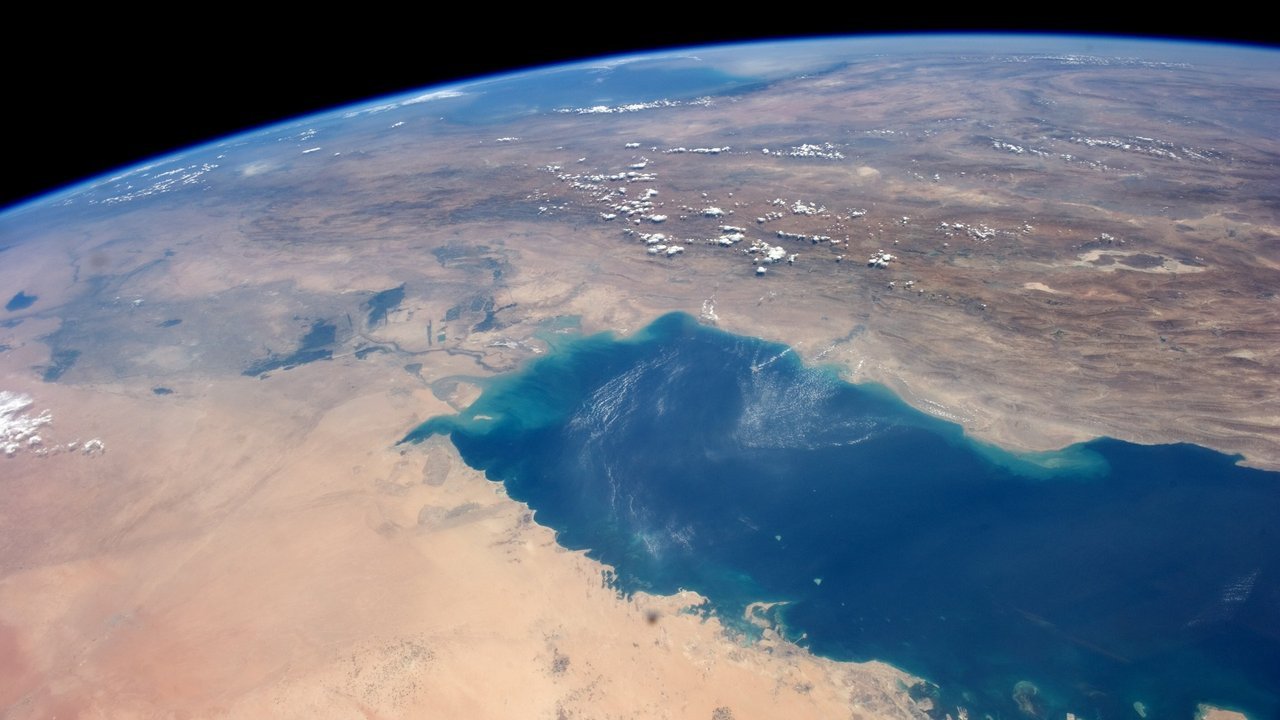
Iran’s Revolutionary Guard says its navy hit four oil tankers in the Persian Gulf and that three more ran into mines near the Strait of Hormuz, a claim that, if verified, seems to mark the largest number of ships damaged in the waterway in a single day since the war began on Feb. 28, according to the Associated Press and PA. In a statement carried on Thursday, Oct. 22, by the Iranian news agency Tasnim, the IRGC Navy said its forces “monitored and pursued the four violating vessels before discovering them engaged in ship-to-ship oil transfers in the northern part of the Persian Gulf.” It added “that all four vessels were hit simultaneously and were burning.” Reuters, in a report carried by Aaj News, says the IRGC described the four as involved “in illegal oil transfers” and tracked by its forces on Wednesday.
The statement also covered three more ships. According to Tasnim, it said “three other vessels suffered incidents and caught fire after striking mines west of the Strait of Hormuz on Wednesday night,” and that they “have been brought to a halt.” Reuters (via Aaj News and Al-Monitor) says three more vessels “collided with mines west of the Strait of Hormuz.” PA, in a report carried by STV News, says three got “damaged and immobilised when they hit naval mines.”
Much about the claim remains unverified. The Associated Press, in a report carried by The Trucker, says Iranian state television reported the claims, “which the AP couldn’t independently confirm,” and that the report “didn’t mention casualties.” PA says the report gave no details about “possible casualties or the flags of the tankers,” and Iran International says the IRGC “did not identify the vessels or report casualties.” AP adds that UKMTO “didn’t report the latest attacks, but it has noted new reluctance by some shippers to report incidents,” and that October has seen the most reported attacks on commercial shipping since March, according to UKMTO. This desk found no public response from U.S. Central Command (CENTCOM) to Thursday’s claim at the time of writing.
Accounts differ on where the four tankers got hit. The IRGC statement, as carried by Tasnim and Reuters, places the ship-to-ship transfers in “the northern part of the Persian Gulf”; Reuters (via Aaj News) also calls the spot “the northern central Persian Gulf.” AP and PA, summarizing Iranian state television, describe all seven ships as damaged “in the Strait of Hormuz.” Reuters also reports that the IRGC said it struck the four “using unauthorised routes through the Strait of Hormuz.” This desk flags the gap and could not pin down any of the locations.
The IRGC paired the claim with a warning to Washington. “The aggressor US military must know that, if this trend continues, the scope of confrontation will extend to the aggressor bases in the region. This is a serious warning,” the statement said, according to Reuters (via Aaj News). The IRGC said the United States keeps encouraging ships to use “an unauthorised passage through a mined area,” Reuters says, while the Tasnim version blames “the US hegemonic regime’s insistence on encouraging vessels to pass through an illegally designated, mined passage.” Tasnim adds that the IRGC Navy said its forces “continue to manage and control the Strait of Hormuz.” Reuters notes that the IRGC declared on Oct. 9 that action against vessels using unauthorised passages would not stop at the Strait of Hormuz.
Markets moved on the report. “World shares and U.S. futures retreated on Thursday as oil prices jumped more than 2%” after the Iranian state television report, AP says, with Brent crude up 3.2% at $112.27 a barrel and U.S. benchmark crude up 2.8% at $99.80. The Guardian says Brent reached $112 for the first time since May 18, and links the rise both to the tanker claim and to Houthi attacks in Saudi Arabia on Wednesday, including the strike on Dammam’s airport. It reports the Stoxx Europe 600 down 1%, Japan’s Nikkei 225 down 2.7% and South Korea’s Kospi down 3.5%. The Guardian also cites Kpler data showing Persian Gulf oil exports above prewar levels, partly thanks to overland pipelines to the Red Sea and the Gulf of Oman.
The claim lands amid talk of a wider war. AP says the United States has sent more military assets to the region, “including a third aircraft carrier and thousands of troops,” and quotes Danny Citrinowicz, a researcher at Israel’s Institute for National Security Studies: “Netanyahu wants to attack Iran, that’s not even a question.” AP says Citrinowicz expects an attack to follow a clear Netanyahu win in Israel’s Oct. 27 election. AP also reports that Iranian Foreign Minister Abbas Araghchi said on Wednesday that Tehran remains open to diplomacy but ready to defend itself. Al Jazeera reports that the IRGC threatened to “extend confrontation to US bases” in the region.
Earlier Iranian mine claims have drawn U.S. pushback. On Oct. 20, this site reported that the IRGC said mines halted three tankers near Hormuz without naming any ship, and that the U.S. military called Iran’s mine claims false; that story lists its own sources. This desk does not know whether any of Thursday’s seven ships overlap with earlier claims.
