The price of borrowing for the U.S. government seems to have climbed to a level last seen in 2002. On Wednesday, October 7, the yield on the benchmark 10-year Treasury note touched 5.365%, its highest since April 2002, Anadolu Agency and Invezz report, before easing to about 5.286% by late afternoon, still up about 1.5 basis points on the day. The 30-year bond yield reached 5.732%, its highest since May 2002, according to Invezz. FXStreet reports that the 10-year yield has risen by more than 60 basis points since the end of July, when hostilities in the Middle East resumed and pushed oil prices sharply higher.
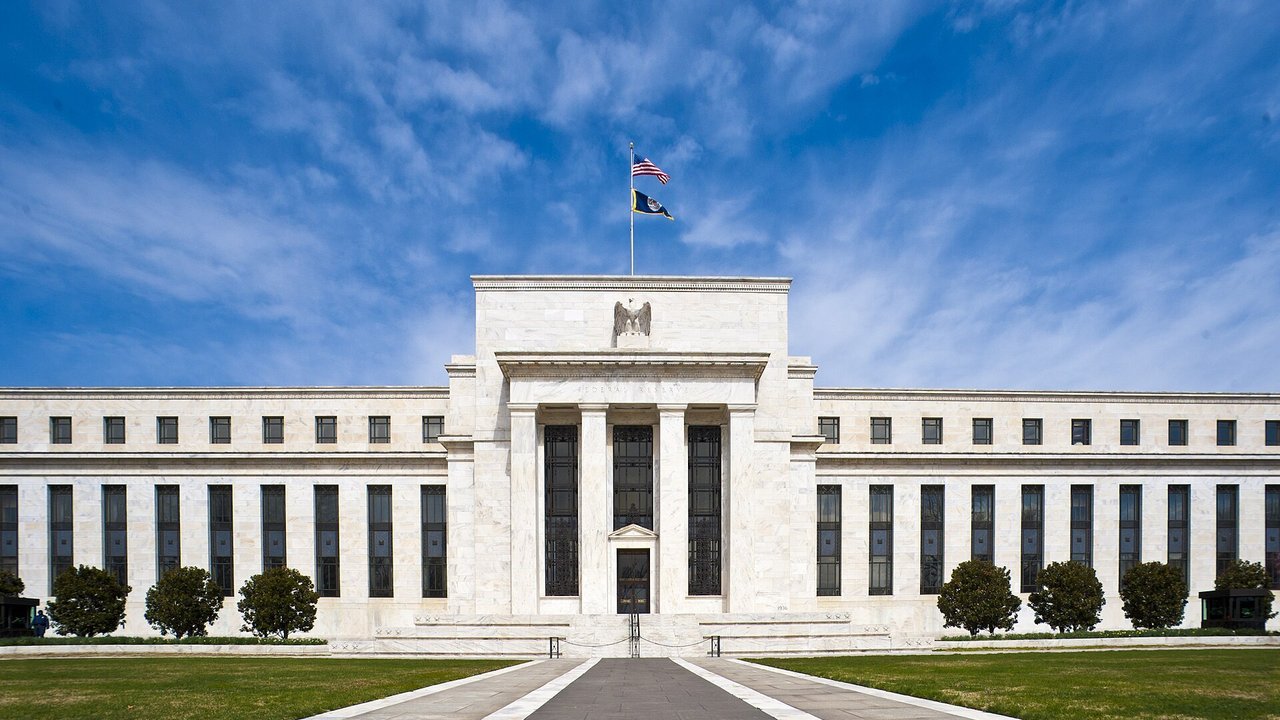
Then, at 2 p.m. Eastern, the Federal Reserve released the minutes of its September 15–16 meeting, and they pointed toward more tightening. At that meeting all 12 voting members, including Chair Kevin Warsh, agreed to raise the federal funds rate a quarter point to a range of 3¾ to 4 percent, with nobody dissenting, the minutes show. The AP calls it the Fed’s first increase in three years. Looking ahead, “most participants” assessed that another increase would likely prove appropriate by year end, the minutes say, though officials stressed that they approach each meeting with an open mind and that incoming data will decide.
The minutes read hawkish in places. “Several participants” said they saw the current policy rate as “not restrictive or only mildly restrictive,” meaning they doubt that rates now do much to restrain the economy. “Many participants” warned that the longer energy prices stay high, “the greater the risk that cost increases in certain sectors could lead to broader price pressures.” And the minutes record that “A couple of participants emphasized that a higher policy rate would help prevent sector-specific price increases stemming from energy market disruptions and AI-related demand from broadening out and generating more persistent inflation dynamics.” Fed staff estimated that headline inflation, by the PCE price index, edged up to 3.8% in August, with core inflation at 3.4%, figures the staff said would come in lower under a new government methodology.
Officials also discussed the bond selloff itself. Over the weeks before the meeting, nominal Treasury yields rose about 35 basis points across the 2- to 10-year range, the minutes say. Market commentary, as relayed by the manager of the Fed’s open market operations, pointed to geopolitical developments, uncertainty around the Treasury’s buyback program, and competition for capital from heavy private borrowing to fund artificial intelligence infrastructure. A few officials named stronger economic data, expected AI-related borrowing, and geopolitics as possible drivers. Many officials still judged that financial conditions supported growth, with stock prices up substantially this year and corporate bond spreads narrow; a few singled out housing as a sector where conditions did not support activity, with mortgage rates stuck high.
The bond market found some relief in the afternoon. The Treasury sold $39 billion of 10-year notes, and yields eased from their highs afterward, Anadolu reports. UPI reports that the auction still cleared at 5.3%, the highest auction yield since 2000, and quotes Peter Boockvar, market strategist and writer of The Boock Report: “The 24-year highs in rates brought out the buyers and resulted in a great auction.”
Stocks slipped but did not break. The S&P 500 fell 17.16 points, or 0.2%, to 7,801.77, a day after topping its prior all-time high from August, the AP reports. The Dow Jones Industrial Average fell 341.41 points, or 0.7%, to 51,179.87, and the Nasdaq composite fell 61.20 points, or 0.2%, to 27,538.69. The AP attributes the pressure to yields climbing worldwide on high inflation and rising government debt loads. Europe fared worse: the Stoxx Europe 600 lost 1%, Italy’s FTSE MIB 2.51%, and France’s CAC 40 1.22%, amid worries over French public finances, Anadolu reports. Gold fell about 1.4% to $4,107.50 an ounce, and U.S. crude slipped 0.54% to $88.96 a barrel.
Households feel the move most directly through mortgages. The average rate on a 30-year fixed mortgage climbed to 7.49% in the week ending October 2, its highest since November 2023, up from 7.30% a week earlier, the Mortgage Bankers Association reported, according to Anadolu; mortgage applications fell 4.2%. The AP notes that longer-term borrowing costs have jumped in recent months for several reasons, including rising government debt, heavy borrowing by tech firms to build data centers, and climbing oil and gas prices, and that the Fed’s own hike likely played only a limited role.
Not every Fed voice sounds in a hurry. Since the September meeting, New York Fed President John Williams has spoken of “no need for urgency,” Axios reports, and Vice Chair Philip Jefferson said last week that policymakers “will need to come to our own judgement, which may take more time,” the AP reports. Traders agree for now: futures pricing points to no move at the October 28–29 meeting and a hike in December, the AP reports, and Invezz puts the odds of an October hike below 20% on CME’s FedWatch tool, down from 37.6% a week earlier. President Donald Trump, who appointed Warsh earlier this year, has called the rate-setting committee “very political” after the September hike, the AP reports.
What the desk will watch: the September consumer price index, due next week, according to Axios; whether the 10-year yield breaks above its April 2002 closing peak of 5.48%, which The Hill cites; how mortgage rates respond as the housing market heads into winter; and whether the Fed raises rates again on October 29 or waits for December.
