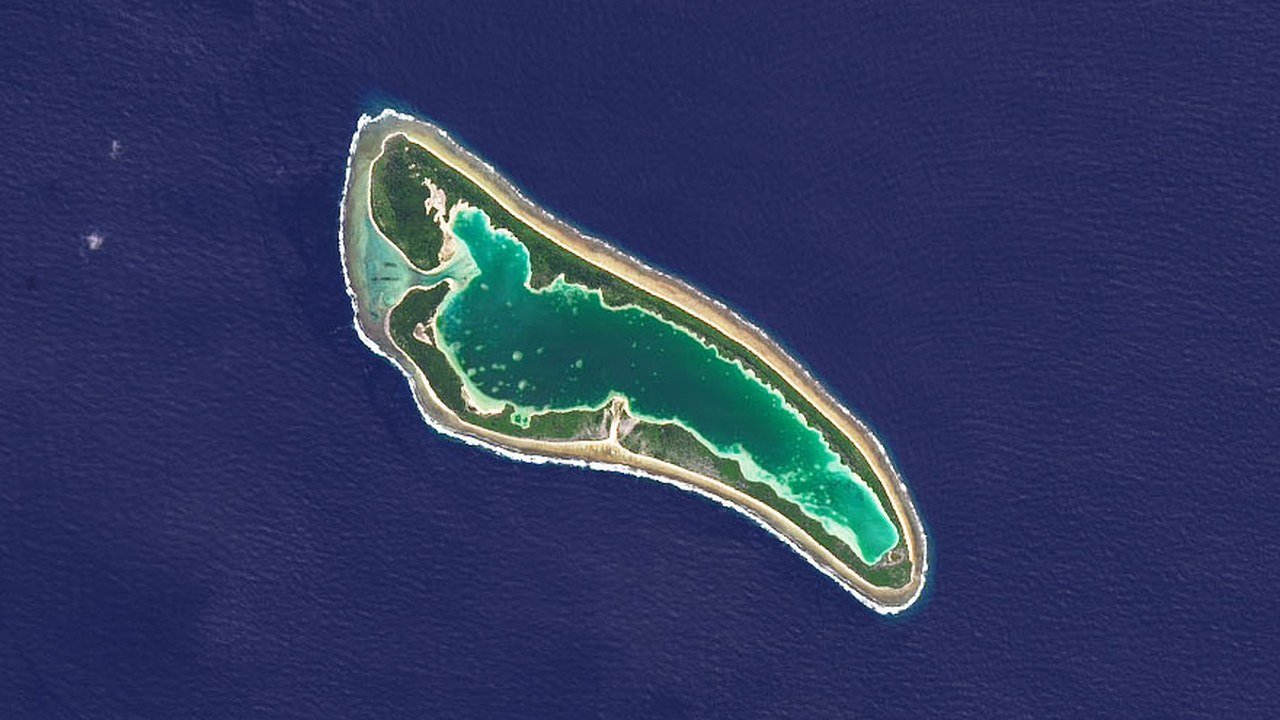
The search for Amelia Earhart’s missing Lockheed Electra on Nikumaroro, an uninhabited atoll in Kiribati, seems to have restarted after three days of rough seas kept the team aboard its ship. Purdue University posted on X at 1:55 PM PT on Oct. 17, already Sunday morning on the atoll, that “the weather has finally cleared, and the expedition team is heading back to the lagoon on Nikumaroro to continue investigating the Taraia Object,” according to the post. The BBC reports that the search resumed after the weather cleared on Sunday, and CBS News wrote on X that the researchers “can finally disembark and perform their research.”
The BBC quotes Sirisha Bandla, a technology specialist on the expedition, in a video update from the deck of the Marin Mainiku: “We are finally getting off the ship and able to land on Nikumaroro.” She added, the BBC reports: “We’re working to get everything done today if we can,” and “The crew’s really excited.” This desk did not locate the video itself and relies on the BBC’s account of it.
Purdue, the Purdue Research Foundation and the Archaeological Legacy Institute run the search together. In an Oct. 12 release, Purdue says the 17-person expedition team, supported by a 17-person boat crew, reached the atoll that Monday after a five-day, 830-nautical-mile voyage, and that the team came to investigate a visual anomaly spotted in satellite imagery, the Taraia Object. In an Oct. 15 release, Purdue says the team began its underwater survey of the lagoon on Wednesday, Oct. 14, using a magnetometer and side-scan sonar, and that it expected to share more information “within the next 48 hours.”
Purdue’s Oct. 16 release says severe weather prevented shore work for the third straight day, with prevailing winds up to 20 knots, or about 23 mph, and gusts up to 27 knots, or 31 mph, which made it unsafe for the crew to board the transport boat or take it through a narrow passage in the reef that the British cut in 1963. The same release says the crew decided to extend its stay until the fieldwork ends and carries enough fuel and food for it, and that identification of the object “will not be known until the expedition team can safely complete at least two more days of field operations.” The BBC ties the rough conditions to strong El Niño conditions in the Pacific. The Archaeological Legacy Institute’s Archaeology Channel posted a new episode on X on Oct. 18 that it says shows team members during the three days on the ship.
Purdue says the second phase of the maritime work will use a hydroprobe, a tool that contacts objects directly “to determine their depth, orientation and surface composition,” and a water induction dredge to remove sediment so the team can inspect objects identified in the first survey. The BBC describes the same work as the second of three phases and says that, because of the three-day hold, the team has extended its expedition time.
Sources differ on how long the object has shown up in images. Purdue’s Oct. 16 release says the object “was first spotted on satellite imagery in 2020,” and the Guardian says its name comes from the part of the island where someone first noticed it in a 2020 satellite image. The BBC instead says Purdue describes the object as visible in photography dating back to 1938. The BBC also reports that New Zealand’s Air Force Museum published 1938 reconnaissance images of Nikumaroro on Friday and that the Taraia Object does not show up obviously in any of those black-and-white slides, though they do show the wreck of the SS Norwich City, a British merchant ship that ran aground in 1929. The Guardian says the museum released the full set of 47 images. This desk did not read the museum’s own page.
The Guardian reports that other longtime Earhart explorers, including Ric Gillespie, say the object probably shows a fallen tree rather than the wreckage of her Lockheed Model 10-E Electra; the Guardian also reports that Gillespie called the museum’s photos a “goldmine” on his blog. The BBC says some skeptics believe the object came from a tree that fell into the lagoon, and it recalls that a 2024 sonar find near Howland Island later proved to show a rock formation and that a 2019 expedition near Nikumaroro found nothing. The BBC says the team has yet to indicate whether it has found any promising evidence of the plane.
Earhart and navigator Fred Noonan vanished on July 2, 1937, while trying to reach Howland Island to refuel during an attempt to fly around the world, the BBC reports. Purdue, in its Oct. 15 release, frames the search around the castaway hypothesis, the idea that the pair landed on Nikumaroro in July 1937, and its Oct. 16 release points to a 15-year-old Florida girl, Betty Klenck, who reported hearing Earhart on her father’s shortwave radio, and to radio bearings that the release says converge on the atoll. Rick Pettigrew, executive director of the Archaeological Legacy Institute, says in the same release: “We are committed to sharing information as soon as we are able, while ensuring it is accurate and appropriate to release.” This desk did not visit the atoll and could not verify any finding.
