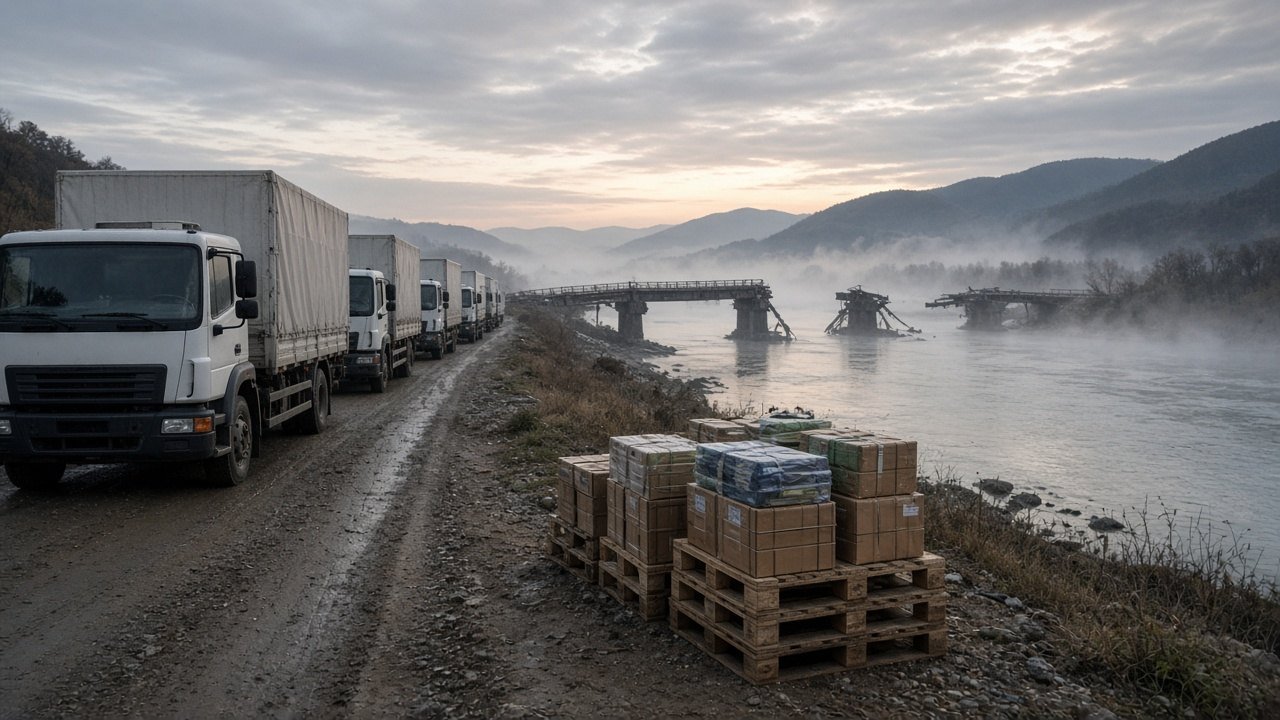
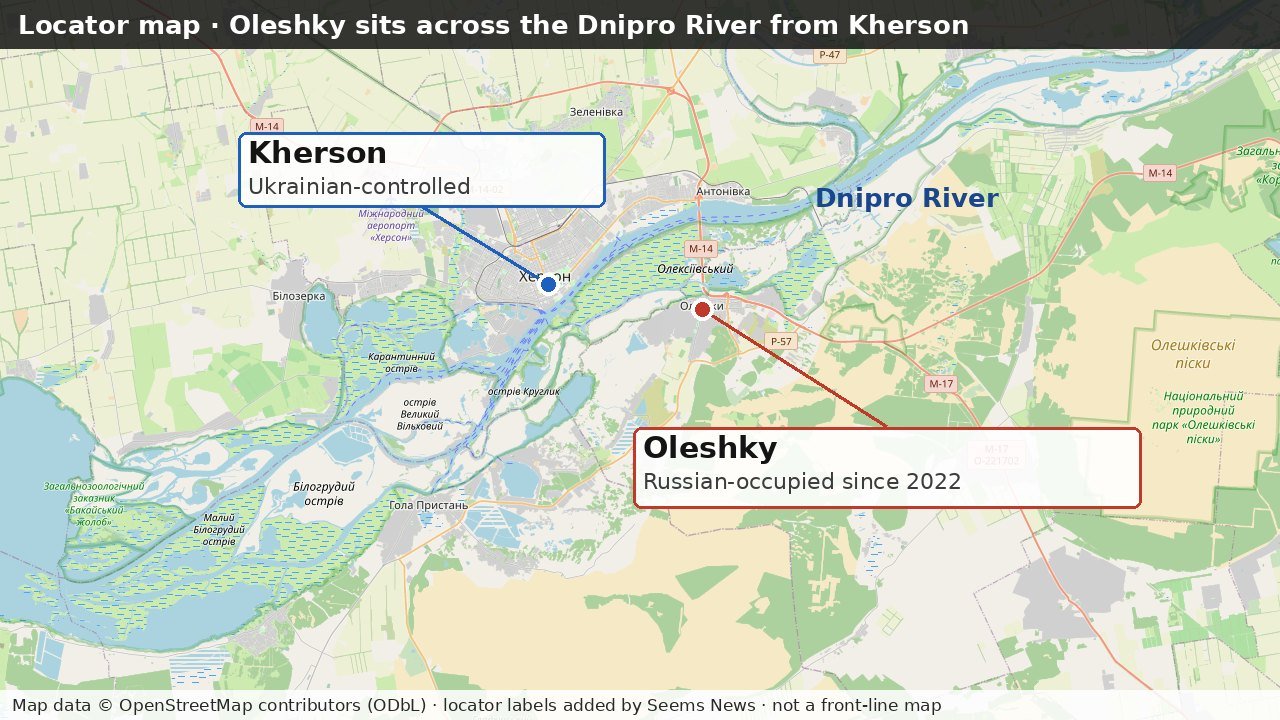
A narrow pause in a war now in its fifth year appears to have come together around one town. On Friday, Oct. 23, the White House said that first lady Melania Trump had secured a ceasefire between Russia and Ukraine “localized to the city of Oleshky,” a Russian-occupied town on the left bank of the Dnipro River, directly across from Kherson. According to the White House statement, both countries agreed to stop all military action in Oleshky “to allow for humanitarian aid to enter and to prepare a civilian evacuation through a designated safe passageway,” and “the localized ceasefire will begin on October 29, 2026.” The deal covers only Oleshky, not the wider front.
Kyiv and Moscow both backed the arrangement within hours, which seems rare for any Russia-Ukraine agreement. Dmytro Lubinets, Ukraine’s parliamentary human-rights commissioner, posted on X that he negotiated for the Ukrainian side while Yana Lantratova, Russia’s human-rights commissioner, represented Moscow, and listed three points: a ceasefire, aid deliveries to Oleshky and safe passage for civilians out of the town (Lubinets on X). He wrote that the operation “will be carried out in stages.” Davyd Arakhamia, who leads President Volodymyr Zelensky’s party in parliament, said on Telegram that an operation to unblock Oleshky and its surroundings would begin soon, aimed at “permanent humanitarian corridors,” and singled out the role of the Pope and the first lady, according to Interfax-Ukraine and Ukrinform.
Information Regarding a Humanitarian Mission to Assist the People of Oleshky
— Dmytro Lubinets (@lubinetzs) October 23, 2026
The Kremlin confirmed the deal, too. Spokesman Dmitry Peskov told reporters that all civilians who wish to leave Oleshky would get that chance, and that the evacuation itself would take at least several days, Reuters reported. “We welcome the efforts of the First Lady of the United States, Mrs Melania Trump, who has made a significant contribution to the coordination of the humanitarian operation,” Peskov said, per Reuters. He added that Vladimir Putin and Donald Trump had discussed the issue in a recent phone call, and that the Defense Ministry would release route details only if cleared for publication, Anadolu reported.
The dates do not line up yet. Hours after the White House named Oct. 29, Russia’s chief of the general staff, Valery Gerasimov, said Russian forces would stop firing on the Kherson axis and observe what the ministry calls a regime of silence from 4 a.m. Moscow time on Oct. 27, which works out to 6 p.m. Pacific time on Monday, Oct. 26, according to Defense Ministry remarks carried by Vesti and RIA Novosti (this desk’s paraphrase of the Russian). He also described engineering reconnaissance to make the route safe for a humanitarian convoy. The BBC Russian Service and the Guardian, citing AFP, both flagged the two-day gap. Peskov had said earlier the same day that the militaries still had to settle the timing (Reuters).
Conditions inside the town look grim on every account this desk read. The White House quotes the first lady calling Oleshky “a front-line war city on the brink of disaster,” with mostly elderly residents who need medicine, food and clean water, limited electricity, mined roads and regular attacks (White House). The BBC reports that remaining residents have resorted to eating garden weeds, and that Ukraine’s foreign minister, Andrii Sybiha, describes a “full blockade” by Russian forces. The Guardian’s live coverage says Russia has failed to deliver food, medicine or other essential goods to the area since May, leading to deaths from starvation and disease, and that each side blames the other for blocking supplies (the Guardian). The Kremlin, for its part, acknowledged “a critical situation” in September and blamed Kyiv, the BBC reports.
How many people remain also depends on who counts. The White House says about 24,000 people lived in Oleshky before the war and an estimated 1,700 to 2,000 remain, along with about 50 children, adding that no formal count has taken place since 2022. Ukraine estimates some 6,000 people in the city and its surrounding areas, including 200 children, according to the BBC; the Guardian puts the figure at about 2,000 civilians, including 50 children, in the city and its surrounding villages (the Guardian). None of the sources explains the gap.
On the mechanics, the White House says non-military, civilian leaders from both countries will visit residents at home to judge what help they need, and that those who want to leave will get transport to a destination of their choosing. “I anticipate some will want to go to Russia, and some to Ukraine,” Melania Trump said in the statement. She also said she had “secured an impartial American media organization” to accompany the teams; the statement does not name it. The BBC notes that the statement does not say how long the ceasefire would last.
The first lady’s office frames the deal as hers. “It was abundantly clear that without my intervention, the possibility to bring humanitarian aid into the city and to evacuate the elderly would be impossible,” she said, describing her “formal role as Exclusive Intermediary” and a channel to both countries built through “the previous six reunifications of 34 children” (White House). Other accounts spread the credit wider. Arakhamia called it a long process involving many people and thanked the Pope alongside her (Interfax-Ukraine). The Guardian reports that Pope Leo called for an intervention earlier in the week, and that Lubinets said on Oct. 18 that he thought a deal looked close, without mentioning the first lady (the Guardian).
Why talks dragged on remains a matter of reporting rather than record. The Guardian’s Peter Beaumont writes that Ukrainian officials blame Russia for rejecting earlier calls, including from the Pope, and that Moscow reportedly feared that, without several thousand civilians held there “effectively hostage,” the town’s spot just across the river from Kherson would draw much heavier Ukrainian attack, perhaps even an effort to take it (the Guardian). Neither Moscow nor Kyiv has said that publicly. The same day brought other strains: Peskov told reporters that U.S.-Ukrainian military cooperation had not stopped, and warned against looking at things “through rose-colored glasses,” while still praising the humanitarian coordination (Anadolu).
This desk read the White House statement; the BBC’s English and Russian reports; the Guardian’s live blog; Reuters via StreetInsider; Anadolu; Interfax-Ukraine; Ukrinform; Lubinets’s post on X; and Vesti and RIA Novosti in Russian. Translations from Russian come from this desk and appear as paraphrase. The map above comes from OpenStreetMap data with labels added by this desk; it shows location only, not front lines.