A magnitude 5.7 earthquake struck under western Shizuoka Prefecture at 1:04 a.m. Sunday, Nov. 8, Japan time, which this desk converts to 8:04 a.m. PT on Saturday, Nov. 7, according to the Japan Meteorological Agency’s earthquake and seismic intensity bulletin. The bulletin puts the source about 40 km down and says the quake posed no tsunami risk; a later JMA hypocenter update refines the depth to 41 km, the figure Jiji Press and Sankei Shimbun use. The U.S. Geological Survey measures it differently — magnitude 5.5 (moment magnitude), about 10 km northwest of Hamakita in Hamamatsu, at roughly 38 km depth — a gap AP also notes. The two agencies use different magnitude methods, and the matching origin time in the USGS record (16:04 UTC) points to one quake measured two ways, in this desk’s reading.
Where the ground shook hardest: JMA’s intensity table records upper 5 — the fourth-highest level on the Japanese seismic intensity scale, as Jiji’s English service explains it — in Chita, on the Chita Peninsula south of Nagoya. It records lower 5 in Seto, Handa, Kariya, Toyota, Tokai, Miyoshi, Shinshiro and Togo in Aichi, in Urugi village in Nagano, in Ena in Gifu, and in Hamamatsu’s Hamana Ward in Shizuoka. Kyodo describes what those numbers mean on the ground: at upper 5, “most people find it difficult to walk without holding onto something and unfixed furniture may topple over.” Jiji adds that the shaking in Aichi ran stronger than near the source in western Shizuoka, which it says likely reflects ground conditions.
Watch: NHK’s footage from across Aichi, and Weathernews’ live explainer, on X
If an embed does not load, it shows as a plain link to the original post. The clips add pictures to, and do not replace, the JMA data and the Kyodo, Jiji, Chunichi, Sankei and AP reporting above.
View the @nhk_news post on X
View the @wni_live post on X
Counting the injured, three ways. Jiji, in a Japanese report updated at 11:49 a.m. Japan time, counts 19 hurt: citing Aichi Prefecture and others, it says a woman in her 50s in Hekinan fell while evacuating outdoors and broke her left ankle and 15 people suffered light injuries, with three more lightly hurt in Shizuoka. NHK’s latest-news list, captured on its Shizuoka damage page, also headlines 19 injured. The Chunichi Shimbun, Nagoya’s regional daily, says its own reporting confirmed at least 21 injured across Aichi and Shizuoka as of 11 a.m. AP, citing local media, says at least 22, and Kyodo says “over 20” in Aichi and Shizuoka. This desk reports the spread rather than picking one number: the counts appear to come from different hours and different tallying methods, and none of the sources this desk saved reports a death.
What the injuries look like, in the Chunichi Shimbun’s fire-department-by-fire-department rundown (this desk’s translation from Japanese): people fell at home, on stairs or getting out of bed in the dark. A man in his 50s in Nishio suffered a facial cut from a falling object; a woman in her 50s in Tokoname broke an ankle on her stairs; in Nagoya, the city’s disaster warning headquarters counted five people in their 30s to 60s lightly hurt, including a woman in her 30s in Kita Ward hit on the forehead by a falling wall clock as she slept. Shizuoka Prefecture reported three people hurt — in Hamamatsu, Kakegawa and Mori — the Chunichi Shimbun says; Sankei describes them as women in their 30s to 90s and says none of the injuries appeared life-threatening.
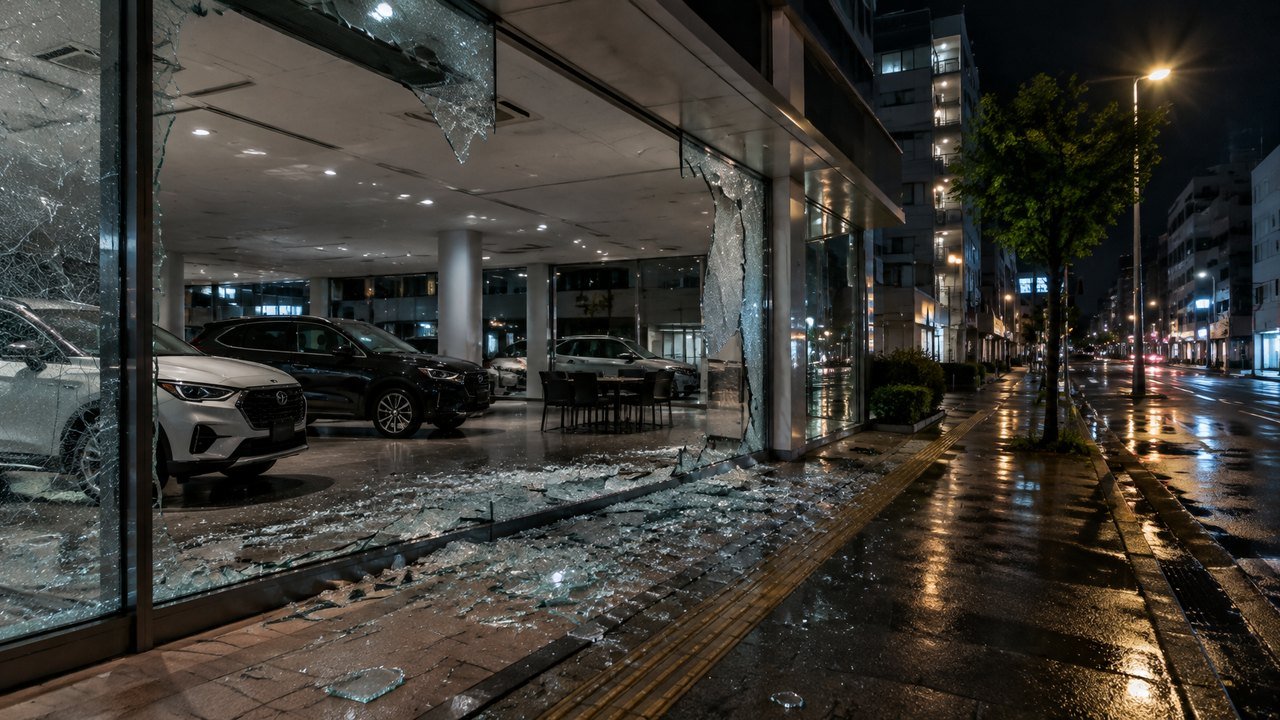
Physical damage, as reported: the Chunichi Shimbun runs a photo of a car dealership in Shimoji-cho, Toyohashi, with its large windows shattered, and says a rockfall hit prefectural road 11 in Toyota without hurting anyone; Toyota City opened emergency evacuation sites citywide, and Chita set up a disaster headquarters at 1:20 a.m. and opened shelters, the paper reports. AP says Japanese TV showed shattered store windows and glass on the streets, plus a bookstore with mounds of books thrown from the shelves. Hamamatsu City’s own 2:30 a.m. situation report lists no confirmed human or building damage at that hour, with checks still under way, no water outage but some cloudy water, no power or gas damage, and a delay to the Sunrise Izumo sleeper train — an early snapshot that later prefecture-level counts overtook.
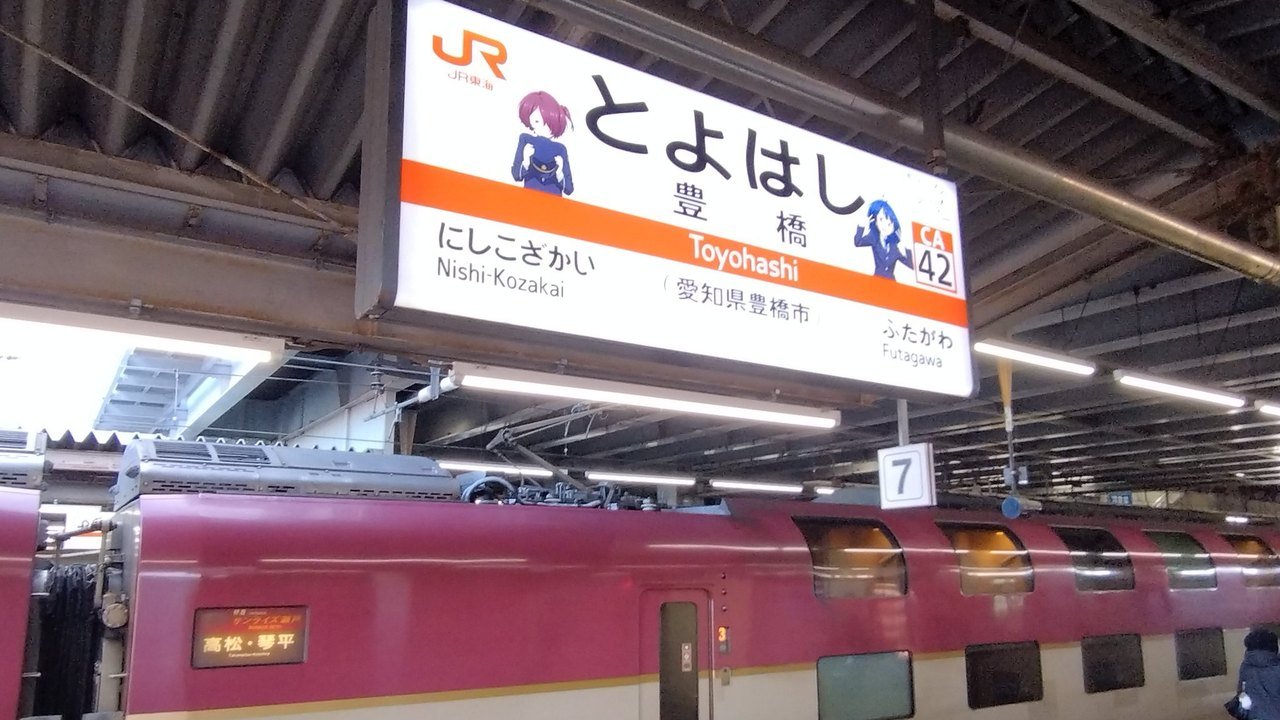
Rail and power checks: JR Central ran Tokaido Shinkansen bullet trains at reduced speed between Shizuoka and Gifu-Hashima after safety inspections, Kyodo reports, with normal-speed operation back before noon; Jiji says 29 trains in both directions ran up to 52 minutes late. Some conventional lines in Aichi paused service, per Sankei. Chubu Electric Power found no abnormalities at its Hamaoka nuclear plant in Shizuoka, according to Kyodo, which notes the plant sits near the projected source area of a potential Nankai Trough megaquake. The central government set up a liaison office, Kyodo adds, and Aichi Governor Hideaki Omura convened the prefecture’s disaster headquarters and urged residents to follow official information and stay on maximum alert for aftershocks, the Chunichi Shimbun reports (this desk’s paraphrase of the Japanese).
The Nankai question. Kyodo says JMA judged the chance that Sunday’s quake connects to a possible Nankai Trough megaquake as “low.” Jiji reports JMA official Ayataka Ebita’s explanation (this desk’s translation): the quake started inside the oceanic Philippine Sea plate as it sinks beneath the continental plate — a different mechanism from the sudden slip between plates that drives a Nankai quake — and its relatively small magnitude makes a meaningful change to the plate boundary unlikely. AP paraphrases Ebita as saying the agency had detected no apparent change so far. Sankei says an expert panel will examine the quake in more detail.
The forward-looking advice came from JMA’s overnight briefing. Sankei says JMA asked people to watch for quakes up to upper 5 for about a week, especially over the next two to three days, and AP quotes Ebita: “Please be on the lookout for mudslides, falling rocks and the possible effects from rainfall.” JMA’s earthquake list already shows smaller follow-on events, including an M3.3 at 2:03 a.m. under eastern Aichi with a top intensity of 2, which the crowd-sourced alert account @p2pquake also relayed.
One claim this desk could not square with the primary data: AP writes that Aichi and Shizuoka sit far enough from Tokyo “that the quake was not felt there.” JMA’s intensity table lists intensity 1 — the lowest felt level — at stations in Tokyo’s 23 wards and intensity 2 on the Izu islands of Niijima and Kozushima. JMA’s scale guide defines intensity 1 as “Felt slightly by some people keeping quiet in buildings,” so AP’s line and JMA’s table may describe the same weak shaking from different angles; readers should treat AP’s line about Tokyo as the agency’s characterization, not a JMA finding. Separately, the USGS assigns the event a green PAGER alert, its lowest estimate for likely casualties and losses, alongside 64 felt reports from the public in the event record this desk saved.
How rare, by the outlets’ yardsticks: Jiji says the last upper-5 reading in Aichi came in March 1997 during an M5.9 quake in eastern Aichi, roughly 30 years ago; The Straits Times, running Kyodo’s report, says the quake “jolted central Japan.” Weathernews goes further on X, saying no quake centered in western Shizuoka had produced upper 5 since statistics began. This desk found that Weathernews claim in no other saved source and has not checked it against JMA’s historical database.
What would change this account: a JMA or Fire and Disaster Management Agency consolidated injury figure (the 19-to-22 spread should narrow); any aftershock at or above lower 5 in the next week; the expert panel’s Nankai assessment; inspection results for the Toyohashi buildings and the Toyota roadside slope; and any correction to the AP Tokyo line. Until then, the agreed core holds across the agency data and every outlet this desk read — M5.7 by JMA’s measure, upper 5 in Chita, no tsunami, about 20 mostly light injuries, and no reported deaths.