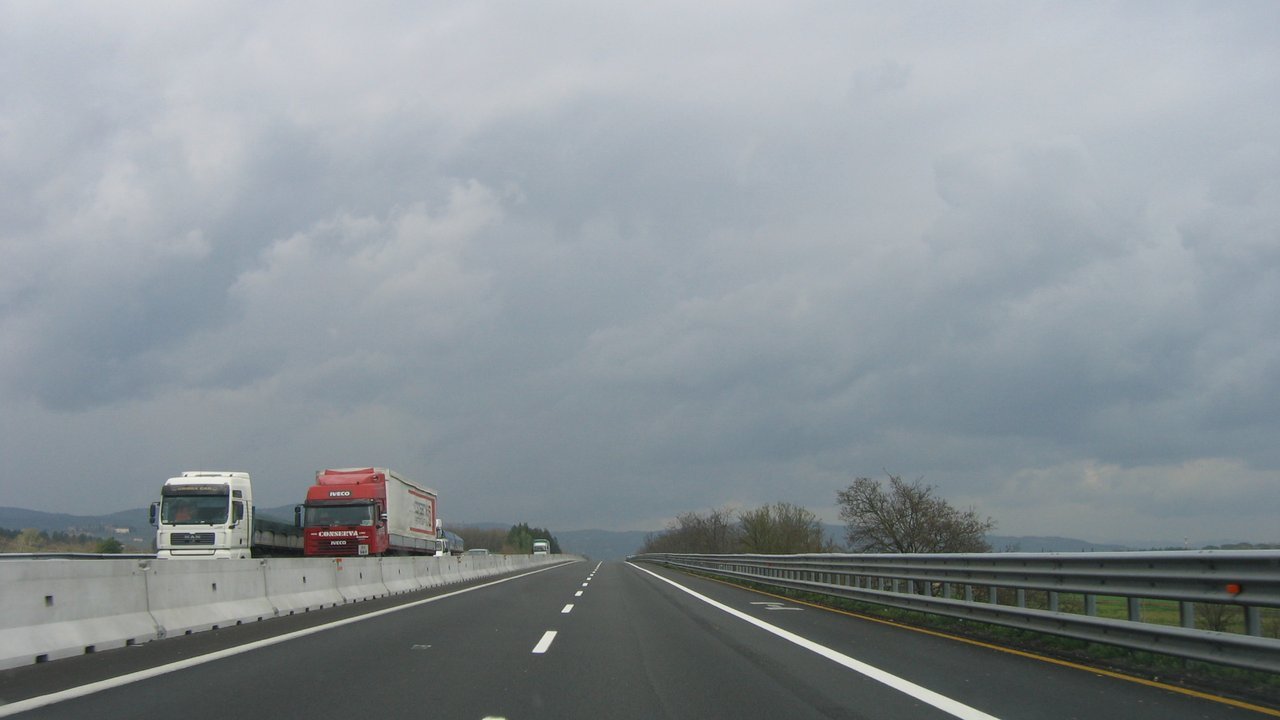
Italy’s government seems to have bought itself some calm on the roads, at least for now. On Thursday, Oct. 22, Prime Minister Giorgia Meloni’s cabinet approved an emergency decree with fresh fuel aid for truckers, farmers and fishers, according to the government’s official communiqué, after roughly a week of trucker blockades that emptied supermarket shelves, petrol pumps and even airport fuel tanks across the south. The communiqué says the Council of Ministers met at Palazzo Chigi at 12:28 p.m. Rome time and finished at 12:50 p.m. By Friday morning, the last big blockades in the Naples area had come down, according to LaPresse, though local reports still describe queues and empty pumps.
The new money tops up aid the government had already promised. ANSA totals the package at €175 million. The government’s communiqué lists €45.2 million more for an existing diesel tax credit covering truckers’ fuel bills from March to August 2026, plus €60 million for fuel bought from Sept. 1 to Oct. 5, 2026 — together, €105.2 million for hauliers, by ANSA’s count. ANSA reports that the extra money lifts the March-to-August credit from €430 million to about €480 million, as Deputy Transport Minister Edoardo Rixi had announced. Reuters, in a report carried by Internazionale on Oct. 21, said the government had already set aside around €1 billion this year to help truckers with fuel costs and with replacing older vehicles.
Farmers and fishers get their own slices. According to the communiqué, AGEA, the state agricultural payments agency, will pay farms a grant of up to 45 cents per litre for fuel bought between June 1 and Oct. 15, 2026, capped at €60 million, and fishing firms can claim 10% of their fuel spending over the same period, capped at €10 million. Agriculture Minister Francesco Lollobrigida told reporters the farm money would arrive “in brevissimo tempo” — very soon, in this desk’s translation — and would cover about 121 million litres, ANSA reports.
Some of the decree goes beyond cash. The communiqué says hauliers on the national register can ask to suspend leasing payments on their trucks until March 31, 2027, and lenders cannot cancel those leases before then. For haulage contracts longer than 30 days, the transport ministry will publish minimum and maximum percentages for the share of fuel in the price every quarter; for unwritten contracts, invoices must use the minimum figure. Transport Minister Matteo Salvini described that clause as spreading fuel costs onto the companies that hire the trucks too, not only onto hauliers, according to ANSA. The same decree, the communiqué says, delays a customs charge on low-value parcels from Dec. 1, 2026, to Jan. 1, 2027, and exempts companies with net revenue up to €450 million or up to 1,000 employees from sustainability-reporting duties for financial years starting in 2026 and 2027.
Meloni paired the aid with a warning. In a social media post quoted by Euronews and ANSA, she wrote that the government listens to people who protest peacefully and works to give concrete answers (this desk’s paraphrase of the Italian). She also said, according to ANSA, that in some areas a few people kept blocking roads, threatened colleagues who wanted to work and slashed tyres on colleagues’ trucks. In her words: “Questa non è protesta, è intimidazione e l’intimidazione non la tolleriamo” — in this desk’s translation, she called that intimidation rather than protest and said the government would not tolerate it. ANSA reports that she promised to use every legal tool, including rules in the security decree that made road blockades a crime.
The disruption had spread well beyond the roads. On Oct. 21, ENAV, Italy’s air-traffic-management agency, said Crotone and Reggio Calabria airports had run out of jet fuel, and that “pilots must therefore plan to refuel at the departure airport or a previous airport, in sufficient quantity for subsequent legs,” according to ANSA English. Corriere della Sera counted at least seven airports — Naples-Capodichino, Salerno, Brindisi, Bari, Palermo, Crotone and Reggio Calabria — that had issued notices to pilots about short kerosene supplies, and quoted Wizz Air as saying the shortages had caused operational limits that could affect flights to and from Italy. Corriere notes that the operator in Crotone and Reggio Calabria did not report a halt to operations.
Food took a hit too. The ANCD-Conad retail group said perishable goods, including fruit, vegetables, milk and meat, sat stranded on trucks and in warehouses, Reuters reported via Internazionale. “The freedom to protest cannot translate into undermining citizens’ right to receive fresh food or destroying the value created by Italy’s agri-food supply chains,” said the group’s president, Maurizio Pelliconi. Reuters also reported long queues on the A1 motorway near Naples and trucks and tractors rolling into the central square of Ravenna. Rixi told reporters: “If someone is breaking the law, then at a certain point the law must be enforced,” according to the same Reuters report.
The state had already started counting names. On Oct. 21, the interior ministry counted 1,339 people identified and 71 reported to authorities over the road blockades, according to ANSA English. The same day, 11 trucking associations, including Anita, FAI and Confartigianato Trasporti, called on Interior Minister Matteo Piantedosi to remove the roadblocks. “Continuing to paralyze the country is no longer justifiable now that the government has reopened dialogue with the industry,” their joint statement said, according to ANSA English. On Thursday evening, Italy’s strike-guarantee commission asked authorities to act so deliveries of essential goods would resume immediately, citing what it called widespread and persistent blockades, according to ANSA and Euronews. Euronews reports that Rixi called a back-to-work order one of the last tools the government wanted to use before clearing the roads.
The protest movement seems to have split over the decree. In Calabria, the heart of the protests, truckers suspended their action and fresh produce began returning to shelves on Thursday, ANSA English reports. Campania held out longer. On Thursday evening, according to ANSA Campania, striking trucks still blocked tankers from leaving the refineries in eastern Naples, 95% of pumps in the region had run dry, and the Ischia, Capri and Procida ferry links and many local bus runs had faced cuts. ANSA quotes Naples Mayor Gaetano Manfredi as saying the city had trouble guaranteeing essential services. Protesters there told ANSA they felt let down; in this desk’s paraphrase of their statement, they said the decree repeated old or already-announced measures and did not touch fuel prices, and they asked how much extra VAT the state collects on fuel. The opposition sided with the strikers: Five Star Movement leader Giuseppe Conte visited protesting truckers and farmers at the Pizzo Calabro motorway junction and said the government’s biggest failing lay in denying the crisis, according to LaPresse (this desk’s paraphrase). Business groups split as well: Conftrasporto’s Pasquale Russo welcomed the decree, while Confimprenditori’s Stefano Ruvolo dismissed it as “pannicelli caldi” — a band-aid, in this desk’s rendering — according to ANSA.
Questions about who stands behind the hardest-line blockades remain open. ANSA reports that Naples prosecutors ordered checks into threats that some truckers reported, which might point to Camorra infiltration, and that the Guardia di Finanza started looking into fuel sold for as much as €4 a litre. The protesters rejected any Camorra link, ANSA says. Justice Minister Carlo Nordio told SkyTg24 that organized-crime infiltration looked highly likely, Euronews reports. On Friday, LaPresse said police in Caserta had reported about a hundred truckers to prosecutors and to the Naples anti-mafia directorate; this desk could not confirm any charges.
Friday morning brought tankers back to the streets. Fuel trucks left the Naples depots under police escort from first light, with an armoured vehicle on site, after the drivers broke up their camp in via Argine, Cronache della Campania reports. LaPresse says blockades in the Caserta and Salerno areas came down overnight, but some stations still had no fuel and others had queues. ANSA describes a return toward normal at the pumps across the province. Cronache della Campania adds that a group of self-described “autoconvocati” truckers has announced scattered new pickets, and LaPresse reports that taxi associations plan a protest over fuel costs outside the transport ministry in Rome on Monday, Oct. 26. Truckers in Calabria had said they would keep up pressure at least until a meeting at the transport ministry on Oct. 27, according to ANSA English.
Fuel prices sit at the center of the dispute. Italy’s business ministry put the average self-service price on Friday at €2.260 a litre for diesel and €2.022 for petrol on ordinary roads, and €2.300 for diesel on motorways, LaPresse reports, citing the ministry’s price observatory.
This desk read the government communiqué and reports from ANSA (Italian and English), Reuters via Internazionale, Corriere della Sera, Euronews, LaPresse and Cronache della Campania. It could not open AP’s report. Translations from Italian come from this desk and appear as paraphrase, except where marked.
