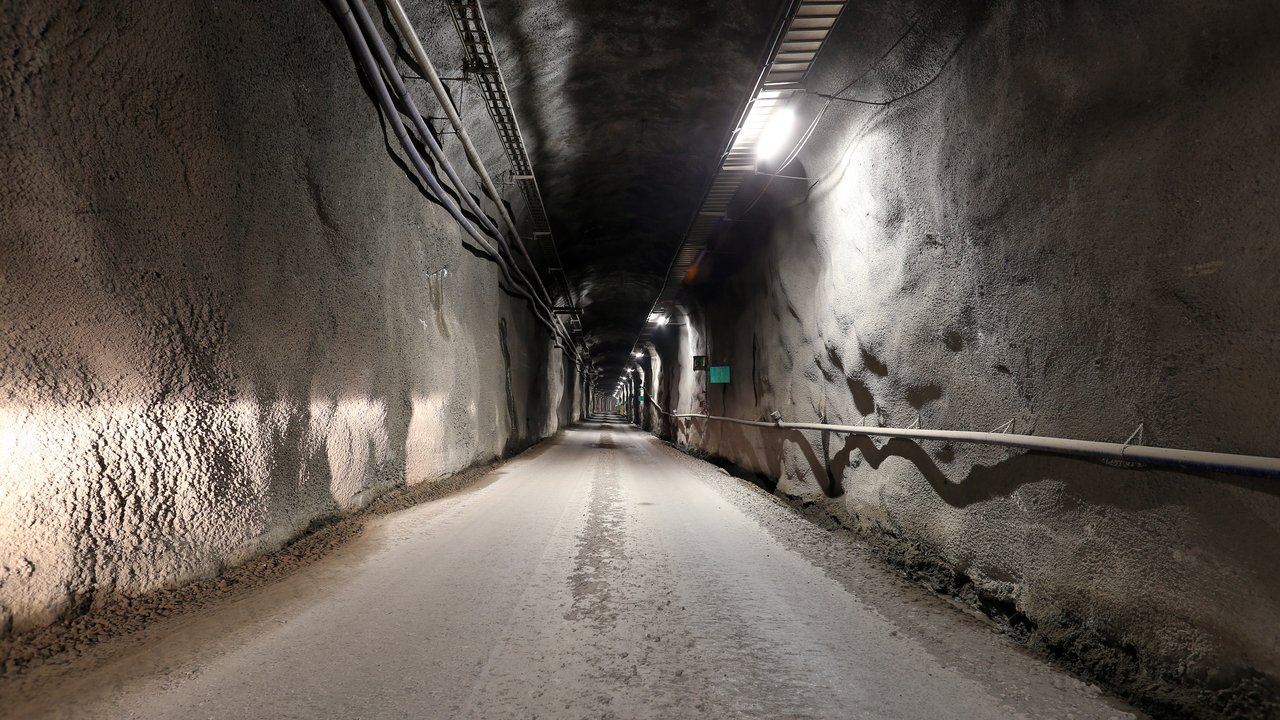
Finland seems to have moved one step ahead of every other nuclear country on the oldest unsolved problem in the industry: where to put the spent fuel for good. On Thursday, Oct. 22, the Finnish government granted Posiva an operating licence for its encapsulation plant and deep final disposal facility at Olkiluoto, according to the government’s announcement, which went out at 2:01 p.m. Helsinki time by its RSS timestamp. In a press release the same day, Posiva called it “the first operating licence anywhere in the world granted for the final disposal of spent nuclear fuel.” NucNet, a nuclear industry news service, and AFP, in a report carried by France 24, describe the decision the same way.
The licence does not switch the repository on. Posiva says it will first “finalise the commissioning stage, carrying out the necessary tests and inspections which STUK also needs to verify and approve,” and that “no detailed schedule is given at this point for the start-up” (Posiva). STUK, Finland’s Radiation and Nuclear Safety Authority, plans an inspection under section 20 of the Nuclear Energy Act before any spent fuel moves into the encapsulation plant, and its own page calls that inspection “a prerequisite for the start-up of the nuclear facility” (STUK). The government puts it plainly: despite its decision, Posiva may not start operating the facility before STUK has carried out that inspection.
What the licence covers, according to the government: an above-ground encapsulation plant and a repository, Onkalo, built more than 400 metres down in the bedrock of the Olkiluoto power-plant area in Eurajoki. NucNet and, back in August, World Nuclear News put the depth at about 430 metres; Yle gives a range of 400 to 450 metres (Yle). Posiva may possess, process, store and dispose of up to 6,500 tonnes of uranium in spent fuel from the Olkiluoto and Loviisa nuclear plants, the government says — about 3,300 disposal canisters, placed at a rate of no more than 60 a year once operations settle. The government expects disposal to continue until the 2120s. After that, the tunnels get backfilled and closed, and responsibility for the fuel passes to the Finnish state under the Nuclear Energy Act.
The licence also reaches past spent fuel, to a limited degree. The government says Posiva may handle and dispose of low- and intermediate-level waste from the facility and from its owners’ plants, capped at 3,000 cubic metres in total, of which no more than 1,500 cubic metres may go to final disposal, plus some other radioactive waste produced in Finland, including some from healthcare and research. It also lists two conditions taken from STUK’s statement: Posiva must hand STUK a periodic safety assessment and an updated long-term safety justification within ten years of the licence.
How the fuel stays put seems to rest on layers. Posiva describes a “multi-barrier principle,” with engineered and natural barriers isolating the fuel deep in the bedrock (Posiva). AFP spells out the layers: copper canisters lowered into holes drilled in the tunnel floors, packed with bentonite clay and sealed with a steel-reinforced concrete plug, in bedrock AFP dates to 1.9 billion years. World Nuclear News reported in August that each canister has an iron insert inside the copper shell, and that the facility aims for safe storage for at least 100,000 years and up to a million. According to Posiva, as AFP reports it, the fuel stays highly radioactive for tens of thousands of years, and after about 100,000 years its radiation falls to roughly the level of the uranium ore it came from.
The people behind the project framed the day as historic. “This is a great and historic day for both Posiva and Finland,” Posiva President and CEO Ilkka Poikolainen said in the company’s release, adding: “This solution has not been built because it was easy. It was built despite not being easy.” Sari Multala, Finland’s Minister of Climate and the Environment, said in the government’s announcement that “as a result of more than 40 years of systematic efforts, Finland will launch the first final disposal facility for spent nuclear fuel in the world.” Jaakko Leino, STUK’s director, told Yle that the decision marks a big milestone, and Yle reports him stressing that the lack of operating experience anywhere in the world does not stop STUK from assessing safety (this desk’s paraphrase of the Finnish).
The approval took longer than planned. Posiva filed its application on Dec. 30, 2021, World Nuclear News reported; the ministry first asked STUK for its opinion by the end of 2023, then extended that deadline in stages to the end of June 2026. STUK delivered a favourable statement on Aug. 4, 2026, finding the facility met the safety requirements of the Nuclear Energy Act and Decree, according to the government. Yle links to its own earlier report that the original schedule had slipped by more than two years (Yle). STUK’s page traces the build: a construction licence in 2015, work on the disposal facility from late 2016 and on the encapsulation plant from summer 2019 (STUK). AFP counts the decision as coming 22 years after construction began on the site; AFP does not say which milestone it counts from.
Why others have not got here first remains a matter of opinion. Juhani Hyvärinen, a professor of nuclear engineering at LUT University, told Yle that Finland had not set out to come first, but that elsewhere the problems have turned out more political than technological, and that the technology originally came under licence from Sweden before Finland finished it (this desk’s paraphrase). AFP reports that Sweden and France also have final repositories under construction, and that most of the world’s spent fuel still sits in temporary storage. Posiva says its subsidiary Posiva Solutions already sells its expertise in 19 countries (Posiva).
Money and ownership: Posiva belongs to two Finnish power companies, Teollisuuden Voima (TVO), which runs Olkiluoto, and Fortum, which runs Loviisa, and the government says those owners carry responsibility for the financial side, while Posiva answers for safe implementation. TVO republished Posiva’s release on its own channel (TVO via Cision). AFP puts the cost of the Onkalo site at an estimated $1.16 billion; this desk did not find that figure in the government or Posiva texts.
This desk read the Finnish government’s announcement (through its RSS feed, since the page itself blocked the box), Posiva’s release, TVO’s copy of it, a search-engine excerpt of STUK’s project page (the page itself blocked the box), Yle in Finnish, AFP via France 24, NucNet and World Nuclear News. Translations from Finnish come from this desk and appear as paraphrase.
